Not the exact question you were looking for?
Paste your question to our Mathbee AI Mentor below to get an instant step-by-step solution.
Triangles
EXERCISE 6.1
CBSE_NCERT_TEXTBOOK
Grade 10
Question:
Fill in the blanks using the correct word given in brackets : (i) All circles are . (congruent, similar) (ii) All squares are . (similar, congruent) (iii) All are similar. (isosceles, equilateral) (iv) Two polygons of the same number of sides are similar, if (a) their corresponding angles are and (b) their corresponding sides are .(equal, proportional)
Step-by-Step Solution
Key Concept: Understanding the distinction between *congruence* (exact same size and shape) and *similarity* (same shape but possibly different size). For circles, any two circles have the same shape, so they are always similar but not necessarily congruent. For squares, all squares have equal sides and right angles, making any two squares congruent. Among triangles, only equilateral triangles are always similar to each other because all their angles are equal (60°). For polygons with the same number of sides, similarity requires equality of corresponding angles and proportionality of corresponding sides.
1. Circles – All circles have the same shape (all points are equidistant from the centre). Hence any two circles are *similar*; they need not have the same radius, so they are not necessarily congruent.
Answer: similar.
2. Squares – A square is defined by four equal sides and four right angles. If two squares are drawn, each side of one square equals the corresponding side of the other, and the angles are identical. Therefore any two squares are *congruent*.
Answer: congruent.
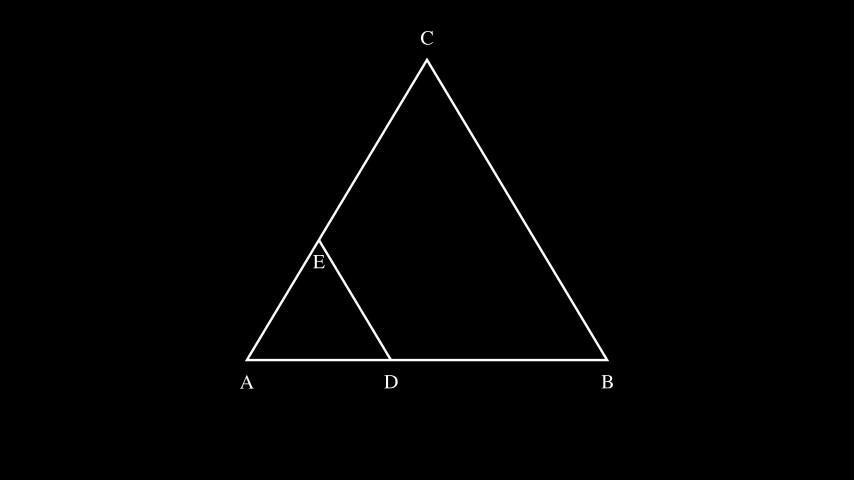
3. Triangles – The statement "All ___ are similar" can be true only for a class of triangles that always have the same set of angles. Equilateral triangles always have three angles of $60^{\circ}$, so any two equilateral triangles are similar. Isosceles triangles can have different apex angles, so they are not guaranteed to be similar.
Answer: equilateral.
4. Polygons with the same number of sides – For two polygons to be similar, two conditions must be satisfied:
- (a) Their corresponding interior angles must be *equal* (same measure).
- (b) Their corresponding sides must be in the *same ratio* (i.e., proportional).
This is the definition of similarity for polygons.
Answers: (a) equal, (b) proportional.
Thus the completed statements are:
(i) All circles are similar.
(ii) All squares are congruent.
(iii) All equilateral triangles are similar.
(iv) Two polygons of the same number of sides are similar, if (a) their corresponding angles are equal and (b) their corresponding sides are proportional.
Answer: similar.
2. Squares – A square is defined by four equal sides and four right angles. If two squares are drawn, each side of one square equals the corresponding side of the other, and the angles are identical. Therefore any two squares are *congruent*.
Answer: congruent.
3. Triangles – The statement "All ___ are similar" can be true only for a class of triangles that always have the same set of angles. Equilateral triangles always have three angles of $60^{\circ}$, so any two equilateral triangles are similar. Isosceles triangles can have different apex angles, so they are not guaranteed to be similar.
Answer: equilateral.
4. Polygons with the same number of sides – For two polygons to be similar, two conditions must be satisfied:
- (a) Their corresponding interior angles must be *equal* (same measure).
- (b) Their corresponding sides must be in the *same ratio* (i.e., proportional).
This is the definition of similarity for polygons.
Answers: (a) equal, (b) proportional.
Thus the completed statements are:
(i) All circles are similar.
(ii) All squares are congruent.
(iii) All equilateral triangles are similar.
(iv) Two polygons of the same number of sides are similar, if (a) their corresponding angles are equal and (b) their corresponding sides are proportional.
Correct Answer: (i) similar, (ii) congruent, (iii) equilateral, (iv) (a) equal, (b) proportional
Mathbee AI Mentor (Free Demo)
Confused by the solution? Ask the AI to explain a specific step, tell you where you went wrong, or break down the key trap in this question.